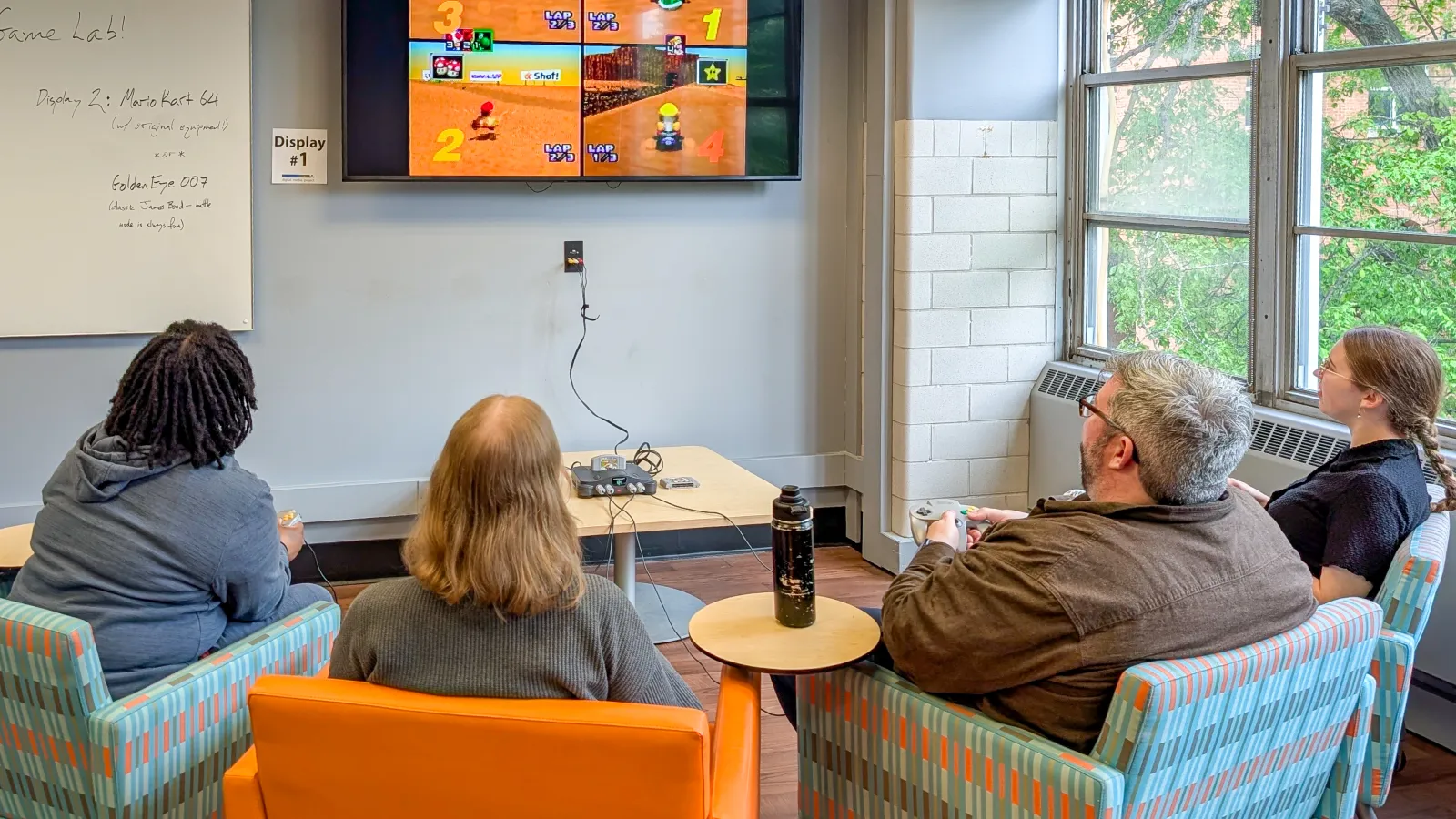
Tucked away on the third floor of Denney Hall, a classroom full of video game equipment has become one of the department’s hidden gems. The lab is part of the Digital Media Project (DMP), managed by Mike Bierschenk, which supports all kinds of digital innovation with specialized expertise and equipment, including a 3D printer, a podcast studio, and a large inventory of video and film equipment. While Bierschenk recognizes that at first the DMP can seem like “a bit of an odd duck” within the Department of English, it reflects the wide range of interests within the department and our efforts to provide students and instructors with the support needed to follow those routes of inquiry. In more than a decade of existence, the video game lab has become an essential space for these efforts.
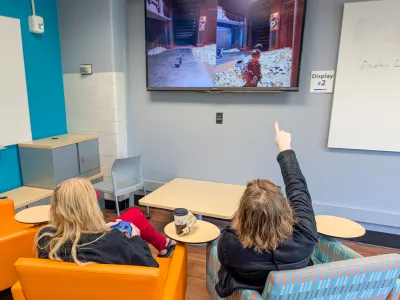
The lab provides support for students pursing a Game Studies minor as well as students enrolled in courses like English 2367.08, "Writing About Video Games and Virtual Worlds” and English 2463, “Introduction to Video Game Analysis.” Video games are also integrated into non-video game focused courses; Bierschenk notes visits from a variety of classes, “everything from Elizabethan drama to contemporary American Indian studies.”
Bierschenk notes that these classes often pose an “access problem” to students and instructors since “it’s just not reasonable to list an Xbox in the required materials for a course.” The video game lab fulfills this need with its installed systems — Nintendo Switch, Xbox Series X/S and PlayStation 5 — as well as 40 years of legacy consoles in inventory. The lab encourages students to experiment with different systems and technology at no additional cost to them, and instructors and students alike gain hands-on experience with video game narrative, structure and gameplay through the DMP’s library of more than 200 games.
The video game lab was created in 2014 in response to a request by graduate students Zach Harvat and Drew Sweet for support in teaching video games as texts in the same way the department was already teaching analysis of other digital media, in addition to traditional written materials. Both Debra Moddelmog and Amy Spears (then department chair and DMP manager, respectively) were excited about the project, and the lab opened with five Xbox 360s and a select library of games. Since then, successive DMP managers have added additional systems and games.
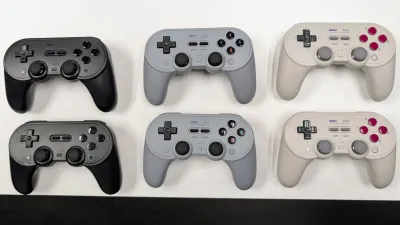
The lab’s display and control system, however had not been updated since its installation, and it was showing its age. Bierschenk notes that, in particular, “newer laptops and tablets often simply wouldn’t connect and we’d have to hack together a fix. It was messy and generally not a great look for a tech office!” Since the entire control system would need to be replaced regardless, Bierschenk says, “we took the opportunity to not only fix the connection problems, but to reimagine how the lab could work.” Through consultations with DMP student staff, colleagues in ASC Technology Services, and engineers at Ohio Valley AV — and with the enthusiastic support of department leadership — a new room design emerged.
The most obvious change with the current system, installed just before spring semester of 2026, is a new media rack at the front of the room that houses all the AV components and the video game consoles themselves. Previously consoles were tied to specific TVs, but now instructors use a touchscreen panel to display any of the installed consoles on one or more of three large displays, or to share their own device’s screen via HDMI or wireless screen share. For the DMP’s stock of legacy systems, each display also has a custom wall panel with individual connections. Together, these upgrades make the experience in the video game lab a seamless one, allowing students and instructors to maximize their time in-game rather than troubleshooting systems.
Senior Lecturer Ryan Helterbrand says teaching in the video game lab is “a fantastic opportunity with a mix of classic consoles and contemporary games for students to get real, hands-on experience with the entire history of video games.” After a semester in the upgraded lab, Helterbrand emphasizes that “the ability to integrate old and new platforms in my classes” creates “fantastic experiences” like playing Duck Hunt (1984) on an original Nintendo Entertainment System and using the light gun on a CRT.
Bierschenk emphasizes that though services and facilities have changed over time, “the DMP’s overall purpose remains the same: to support our instructors and our students in exploring new and interesting digital spaces and forms, no matter what they are.”
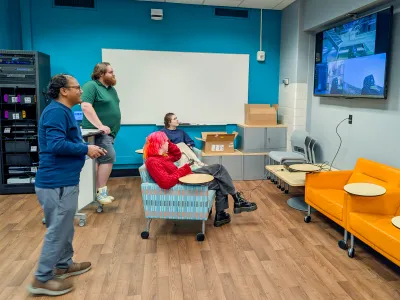
While game studies courses are an excellent opportunity to get to know the space, the video game lab isn’t just for classes and coursework: whenever it’s not otherwise scheduled, the lab is open for casual play. Grab a friend and stop by the Digital Media Project’s office in Denney 324 to check out the refreshed space and play a few games!